Tell Us About Your Project
Share your product, quantity and project requirements. We will review the details and respond with the relevant next steps.


How to choose astragalus root slices (Huang Qi) — read the cross-section, spot sulfur treatment, understand grades and cuts, and know what to check before you buy in bulk.
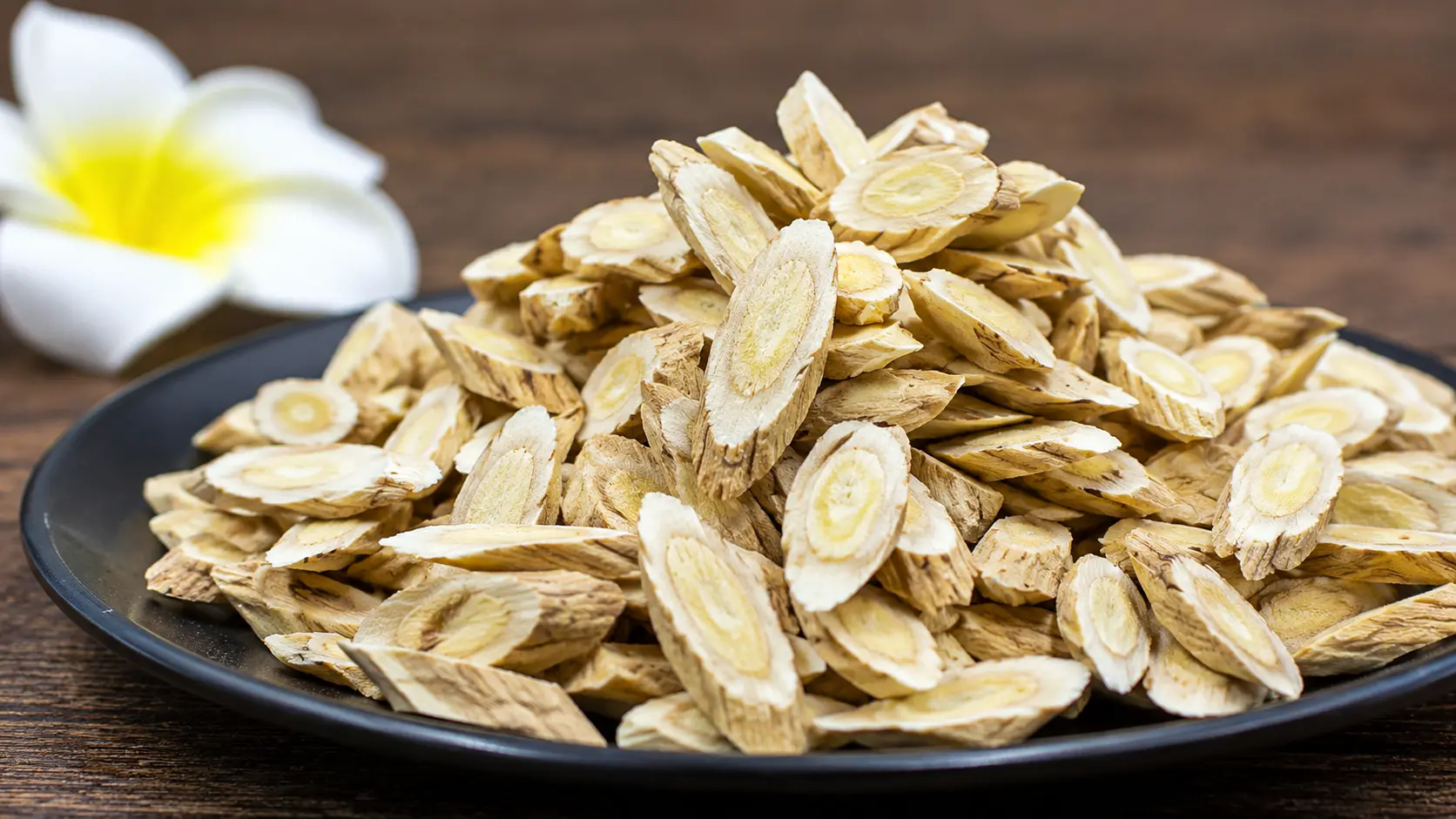
To choose astragalus root (Huang Qi), read the cut surface, not the price list: good slices show a pale yellow core with a white outer ring and fine radiating lines, taste faintly sweet with a bean-like aroma, and feel firm — not spongy, not bleached-bright, not sour-smelling. Grade follows root thickness and uniformity; sulfur treatment and species substitution are the two things that catch buyers out. Slice format and grade terms across other herbs follow the same logic — see the Chinese herbal slices specification guide.
Most buyers grade astragalus by photo and price. That is how you end up with sulfured, hollow, or substituted material. The signals that actually matter are on the slice itself — here is how to read them before you commit to a bulk order.
Astragalus is the dried root of Astragalus membranaceus, used across Traditional Chinese Medicine (TCM) and in herbal soups, teas, and supplement manufacturing. Quality varies a lot between lots, and the fastest read is the transverse cut surface.
On a good slice you should see:
If a slice is bleached-bright, smells sour or sharp, crumbles easily, or has a hollow centre, treat it as lower grade or treated material until proven otherwise.
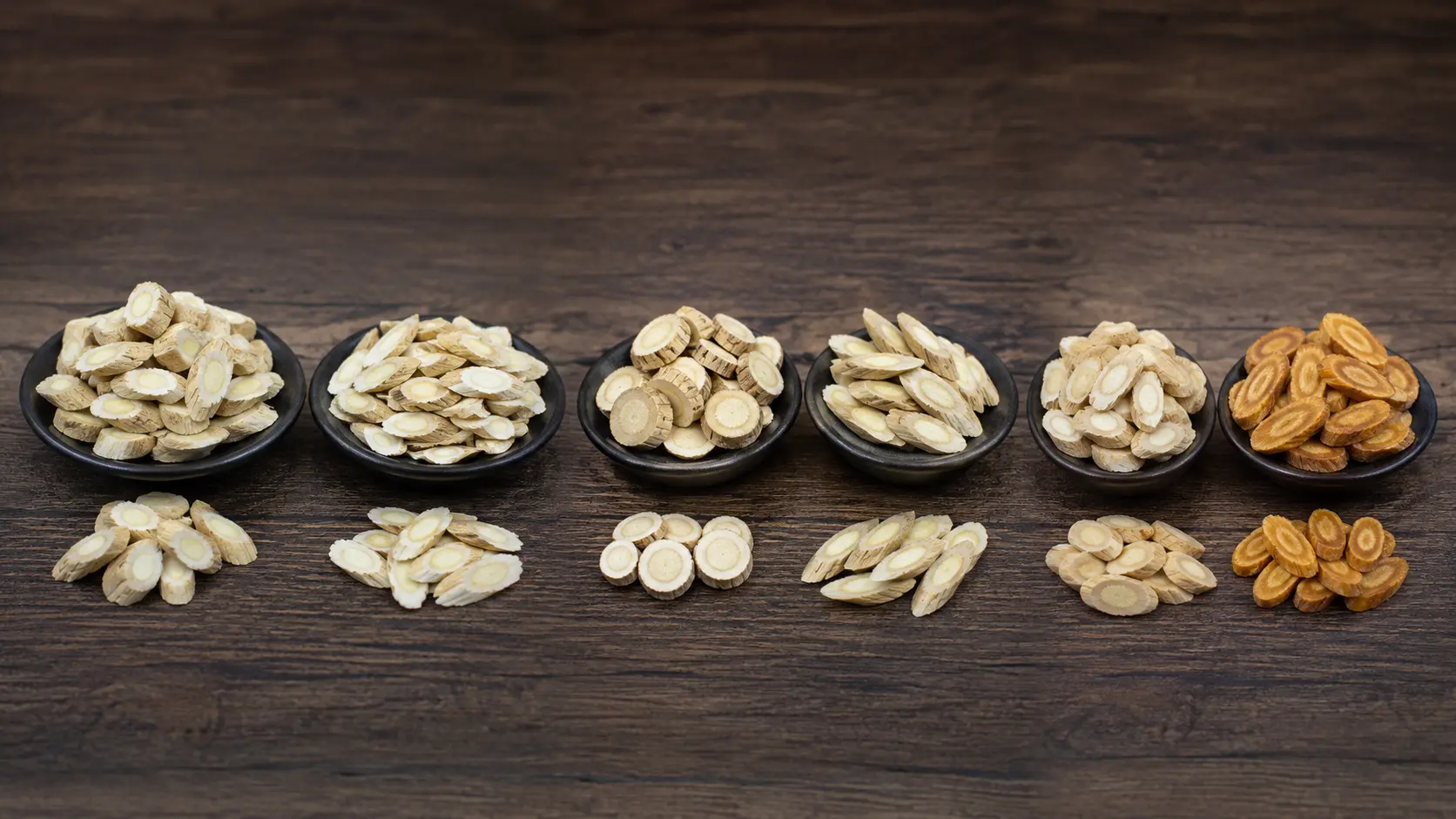
“Astragalus slices” is not one product. What you actually choose between:
Deciding which grade fits your product — a tea, an extract feedstock, or a dispensary line — is where cost and quality actually trade off. Our astragalus root slices product page lists the cuts and grades we run.
This is the single most common quality trap. Some processors fumigate astragalus with sulfur to brighten colour and deter mould and insects — but it leaves a sulfur dioxide residue that can breach import limits, and it dulls the natural aroma.
How to tell them apart:
For any bulk order, specify sulfur-free in writing, and confirm it on the batch documentation rather than by eye alone.
If you are not sure, raw slices are the more flexible starting point.
Appearance narrows the field, but only lab testing confirms identity and purity — an HPLC fingerprint (against markers such as astragaloside IV and calycosin-7-glucoside) plus a residue and heavy-metal panel. We test every lot in our own laboratory before release; you can see how that works on our in-house laboratory and quality control page, and request a sample Certificate of Analysis (COA) for any grade.
One identity check worth naming: Hong Qi is not astragalus. Hong Qi (Hedysarum polybotrys, “red astragalus”) looks similar and is sometimes sold as Huang Qi, but it is a different species. An HPLC fingerprint is how you confirm you got the species you ordered.
How can I tell good astragalus from poor quality? Read the cut surface: good astragalus shows a whitish bark and pale yellow wood with fine radiating lines (“chrysanthemum heart”), a firm texture, and a faint sweet, bean-like aroma. Bright-white colour, a sour smell, or a spongy centre are warning signs.
What does “sulfur-free” astragalus mean, and why does it matter? It means the root was dried and stored without sulfur fumigation, so there is no added sulfur dioxide residue. Sulfured material can breach import limits and loses its natural aroma, so specify sulfur-free for bulk orders. Moisture and warehouse conditions after arrival are covered in storing Chinese herbal ingredients in bulk.
What is the difference between raw and honey-processed astragalus? Raw (sheng) slices are simply cleaned, cut, and dried. Honey-processed (zhi) slices are traditionally processed with honey and are darker and sweeter. Choose based on your formulation.
Is Hong Qi the same as astragalus? No. Hong Qi is Hedysarum polybotrys, a different species that looks similar and is sometimes substituted for astragalus. Confirm identity by HPLC rather than appearance.
How is astragalus graded? Mainly by root diameter and slice uniformity — thicker, even, whole slices grade higher than thin, broken, or mixed lots.
Aile Herb Sourcing & Quality — our team works directly with the Gansu processing lines on grading, testing, and export documentation.
The same specification approach applies to other high-value herbs where adulteration is documented; see our sour jujube seed bulk buying guide for species authenticity, raw vs stir-fried, and Pharmacopoeia 2025 limits.
Tell us the cut, grade, and volume you need, and we’ll send a sample Certificate of Analysis and a factory quote — so you can check the slices and the documentation before you order.
For the full specification framework — botanical identity, slice tolerances, COA fields and supplier evaluation — see our guide on how to specify Astragalus Root Slices for bulk purchase.
To source astragalus root slices against a written specification, review the root and rhizome herbs we supply and send the cut, grade and quantity you need for a sample and quotation.
