Tell Us About Your Project
Share your product, quantity and project requirements. We will review the details and respond with the relevant next steps.

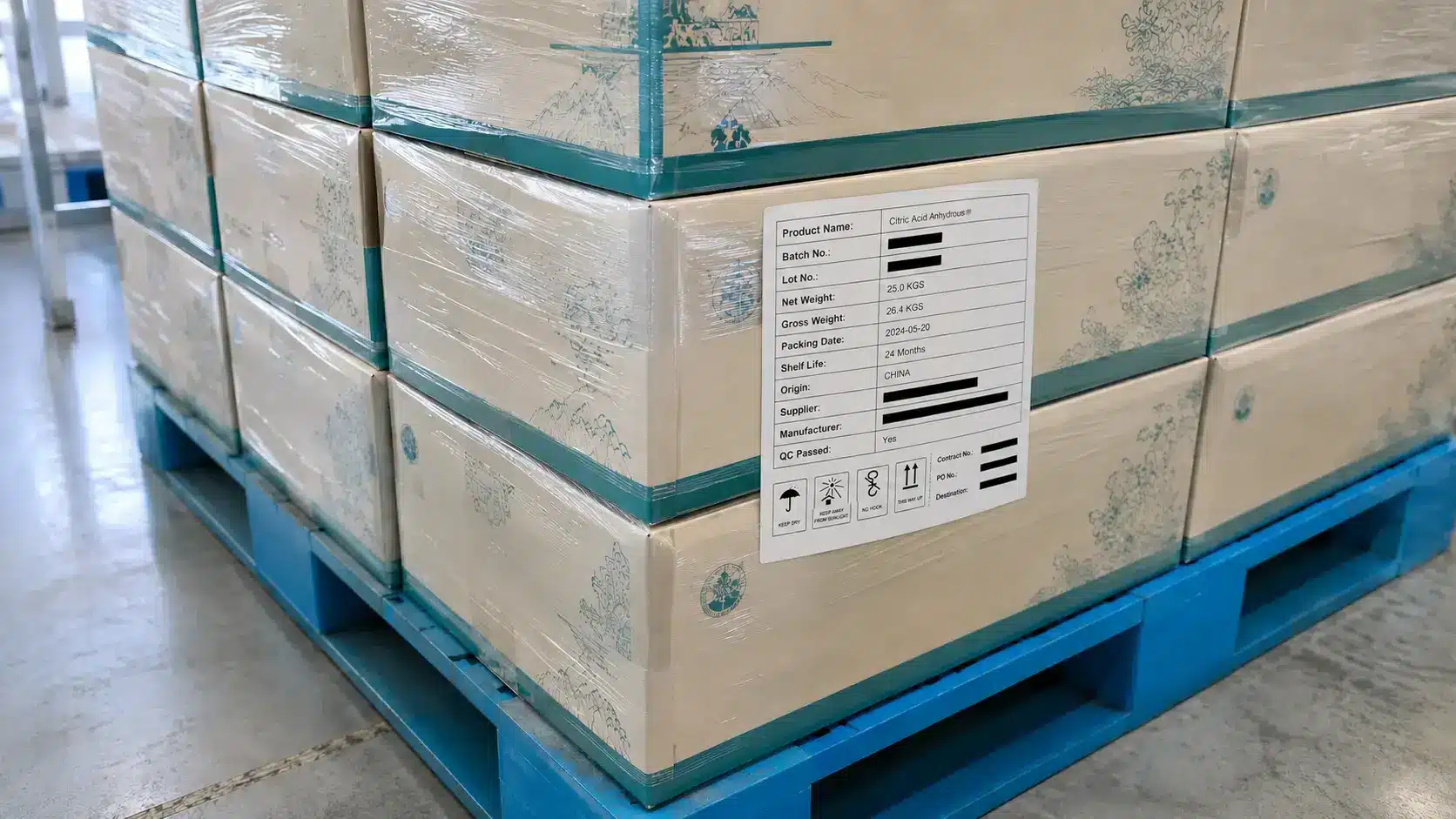
A step-by-step checklist for importers sourcing bulk Chinese herbs — how to verify origin, grade, sample approval, batch COA, testing, and traceability before you place an order, not just compare unit price.
Bulk Chinese herbs sourcing should follow a written buyer checklist covering origin, grade, processing method, sample approval, batch Certificate of Analysis (COA), traceability, and supplier qualification. Compare suppliers by documented quality control and shipment evidence — not by unit price alone. This guide gives you that checklist, step by step, before you place an order.
The expensive mistakes in bulk Chinese herbs sourcing rarely come from paying too much. They come from a bulk lot that arrives inconsistent with the approved sample, a batch whose documents do not line up for your QA team, or a “sulfur-free” claim with nothing to back it. By the time the container lands, the money is committed and the schedule is set.
A low quote is not useful if you are comparing a thin-cut premium sample against a mixed-grade bulk lot. Before asking for the best price, make sure every supplier is quoting the same herb, the same cut, the same grade, and the same document scope. This article is the pre-order checklist that makes that possible.
It assumes you have already shortlisted a supplier. If you are still deciding which supplier to trust, start with our guide on how to qualify a Chinese herbal supplier, then come back here for the batch-level checks.
Order this batch if:
Question this batch if:
Ask the supplier for:
Chinese herbs are agricultural products, so quality shifts between harvests, regions, and processing runs. Without a checklist, that variation reaches your shipment unfiltered. The recurring risks are practical:
A checklist turns each of these from a surprise on arrival into a question you asked before ordering.
| Checkpoint | What Buyers Should Ask | Why It Matters | Risk If Ignored |
|---|---|---|---|
| Herb identity & botanical name | What is the exact product and botanical name? | Prevents confusion with look-alike species | Wrong or mismatched material |
| Origin / sourcing region | Where is it grown, and can origin be stated on documents? | Affects consistency and internal review | Unverifiable, variable lots |
| Grade & part used | Which grade and plant part is quoted? | Grade and part change price and fit | Comparing prices for different quality |
| Cut size / processing method | Whole, sliced, cut, or custom processed? | Cut affects extraction and uniformity | Sample and bulk do not match use |
| Sulfur-free requirement | Is sulfur-free handling confirmed, with residue testing where required? | Sulfur handling matters for some markets | Vague claim with no review path |
| Sample approval | Can we approve a sample before bulk? | Sets the reference for the bulk lot | Sample-to-bulk mismatch |
| Batch COA | Can a COA be linked to this lot? | Connects test data to the shipped lot | Generic document, weak QA review |
| Pesticide & heavy-metal testing | Which items can be arranged for our market? | Testing expectations vary by market | Extra testing needed after arrival |
| Batch traceability | Can raw material, batch, COA, and shipment be connected? | Supports document review and accountability | Batch identity becomes unclear |
| Packing & labeling | What packing, labels, and batch marking? | Affects storage, transport, and receiving | Damage, moisture, or label mismatch |
| Pre-shipment inspection | Can we review photos, documents, or inspect before shipment? | Final checkpoint before dispatch | Problems found only after arrival |
| Supplier qualification | Producer or reseller? What factory proof? | Determines control over quality | Weak accountability, unstable supply |
Beyond the table, three checks decide most outcomes.
Match the sample to the bulk plan. Approve a sample of the exact grade and cut you intend to buy, and agree in writing that the bulk lot will match it. Keep a retained sample so you can compare on arrival — for sliced material, check that the cut is even, the colour consistent, and the broken-piece ratio acceptable. For a herb-specific example, our Dong Quai buying guide shows how grade depends on the root part (head, body or tail), oil content and aroma.
Confirm the COA can be linked to the lot. A useful batch COA carries a lot number and date and states the test items and methods, so your QA team can review it against the shipped lot. A generic report reused across shipments does little for internal review. You can see how testing fits the workflow on our Chinese herbs quality control process and pesticide and heavy-metal testing pages.
Agree on pre-shipment terms. Decide before ordering whether you will review a pre-shipment sample, photos, or an inspection, so there is a final checkpoint before the goods leave. See our pre-shipment inspection page for how this works.
Any one of these is a reason to slow down and ask for documentation before committing.
Aile Herb supplies Chinese herbal slices, bulk Chinese herbs, and herbal raw materials to international B2B buyers through a quality-controlled sourcing and manufacturing system. We work to make the checklist above answerable rather than aspirational:
Buyers sourcing fruit- and seed-based materials can review our Fruit & Seed Herbs range before sending an RFQ. We describe these as capabilities you can request and verify, not blanket guarantees — which is the same standard the checklist asks you to hold any supplier to.
Copy this into your inquiry so the supplier can quote the correct grade and prepare a matching sample:
Product name: [herb name] Botanical name: [botanical name] Part used: [part / cut / grade] Cut / form: [slice / whole / dice / custom] Grade requirement: [grade] Origin requirement: [origin if required] Processing method: [raw / processed] Sulfur-free required: [yes / no / to be discussed] Quantity: [quantity] Destination market: [destination market] Required documents: [e.g. COA, certificate of origin, packing list] Testing requirements: [pesticides / heavy metals / sulfur dioxide / microbiology / moisture] Packing requirement: [packing requirement] Sample required before order: [yes / no] Pre-shipment inspection required: [yes / no] Other notes: [labeling, storage, pallet, or shipping notes]A clear specification lets suppliers quote on the same basis, so you compare like with like instead of comparing different grades, cuts, or document scopes.
What should buyers check before sourcing bulk Chinese herbs? Buyers should confirm herb identity and botanical name, origin, grade and part, cut and processing method, sulfur-free status where required, a lot-linked batch COA, testing items for their market, and batch traceability — and approve a sample before the bulk order ships. These checkpoints let purchasing teams compare suppliers by quality evidence, not price alone.
What documents should a Chinese herb supplier provide? Buyers commonly request a batch-specific COA or test report linked to the lot number. Depending on the product, market, and buyer requirements, this may include identity, moisture, pesticide residues, heavy metals, sulfur-dioxide residue, or microbiology, plus documents such as a certificate of origin and packing list. State which documents you need before the supplier finalises the quote.
How can buyers avoid sample-to-bulk mismatch? Approve a sample of the exact grade and cut you intend to order, agree in writing that the bulk lot will match it, and keep a retained sample. On arrival, compare the shipped lot against the retained sample and the batch COA before acceptance. For higher-risk orders, request batch and packing photos before shipment.
Why does a batch COA matter for bulk Chinese herbs? A batch COA helps connect test information to the specific lot being shipped, rather than a different or generic lot. A useful COA carries a lot number and date and states the test methods, so buyers can review identity and residue items against their own requirements before accepting the shipment.
Can buyers request sulfur-free Chinese herbal slices? Yes. Buyers can specify sulfur-free in writing and ask how the supplier handles sulfur-free processing, with a sulfur-dioxide residue result where required. Not every product or order carries the same processing requirement, so confirm sulfur-free expectations early so the supplier can prepare samples and documents accordingly.
To put this checklist to work, start from our Chinese herbal slices range: send the herb, cut, grade, quantity and destination market, and request a matching sample before the bulk order.
