Tell Us About Your Project
Share your product, quantity and project requirements. We will review the details and respond with the relevant next steps.

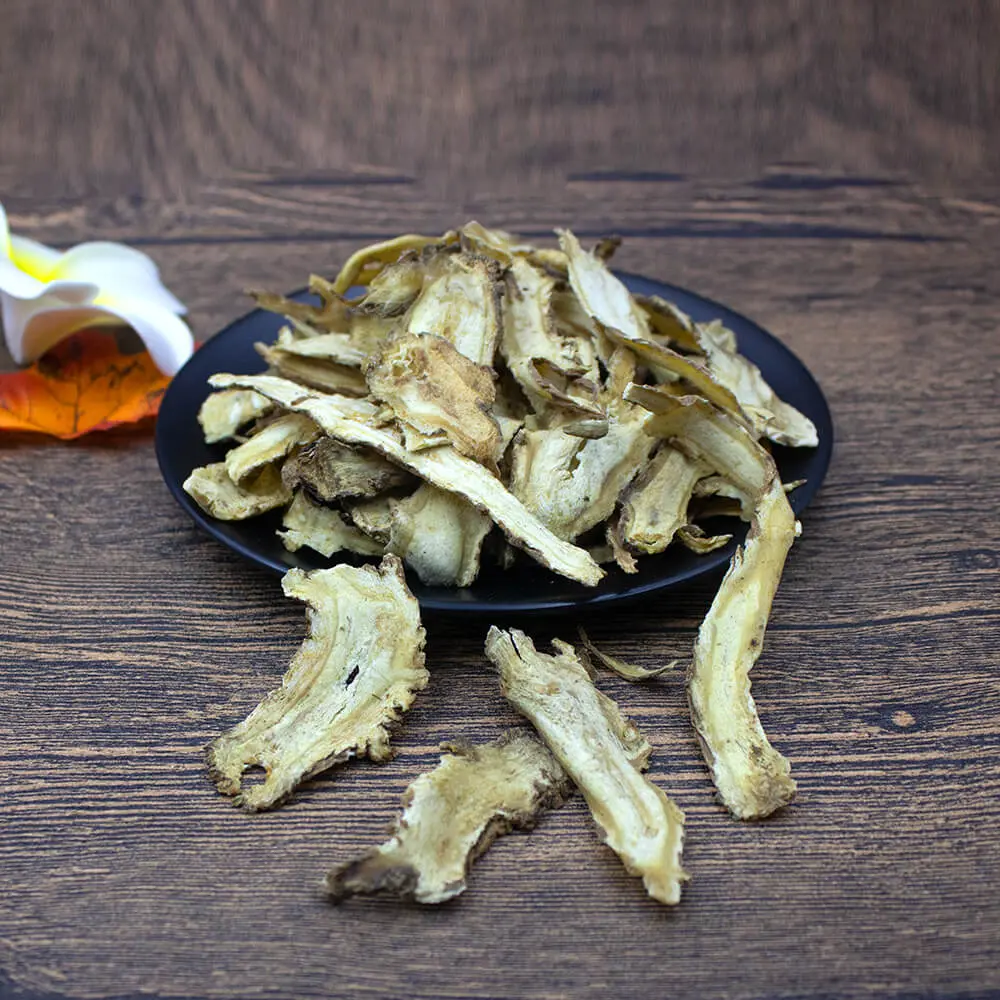
How to choose Dong Quai (Angelica sinensis / Dang Gui) — judge oil content and aroma, read head, body and tail grades, spot sulfur treatment, and know what to check before ordering in bulk.
To choose Dong Quai (Angelica sinensis, Dang Gui), judge it by oil and aroma, not just price: a good root is oily and slightly flexible, not dry and woody, with a strong sweet-aromatic smell and a pale yellowish-brown cut surface. Grade follows which part of the root you get — head, body, or tail — and root size. Sulfur treatment, low oil content, and look-alike substitution are the traps that catch buyers out.
By Aile Herb Sourcing & Quality · Updated July 1, 2026 · 6 min read
Dong Quai’s whole value sits in its aromatic, oil-rich root — which is exactly why it is so easy to buy badly. Dried out, sulfured, or sold as the cheap tail end, it looks similar in a photo but performs nothing alike. Here is how to read it before you commit to a bulk order.
Dong Quai is the dried root of Angelica sinensis, used across Traditional Chinese Medicine (TCM) and as an ingredient in herbal soups, teas, and extract or supplement manufacturing. Unlike a dense root such as astragalus, its quality is judged mostly by oil and smell.
On a good root or slice you should see and sense:
If a root is dry and fibrous with little aroma, it is either over-mature, poorly dried, or the low-value tail end sold as whole root.
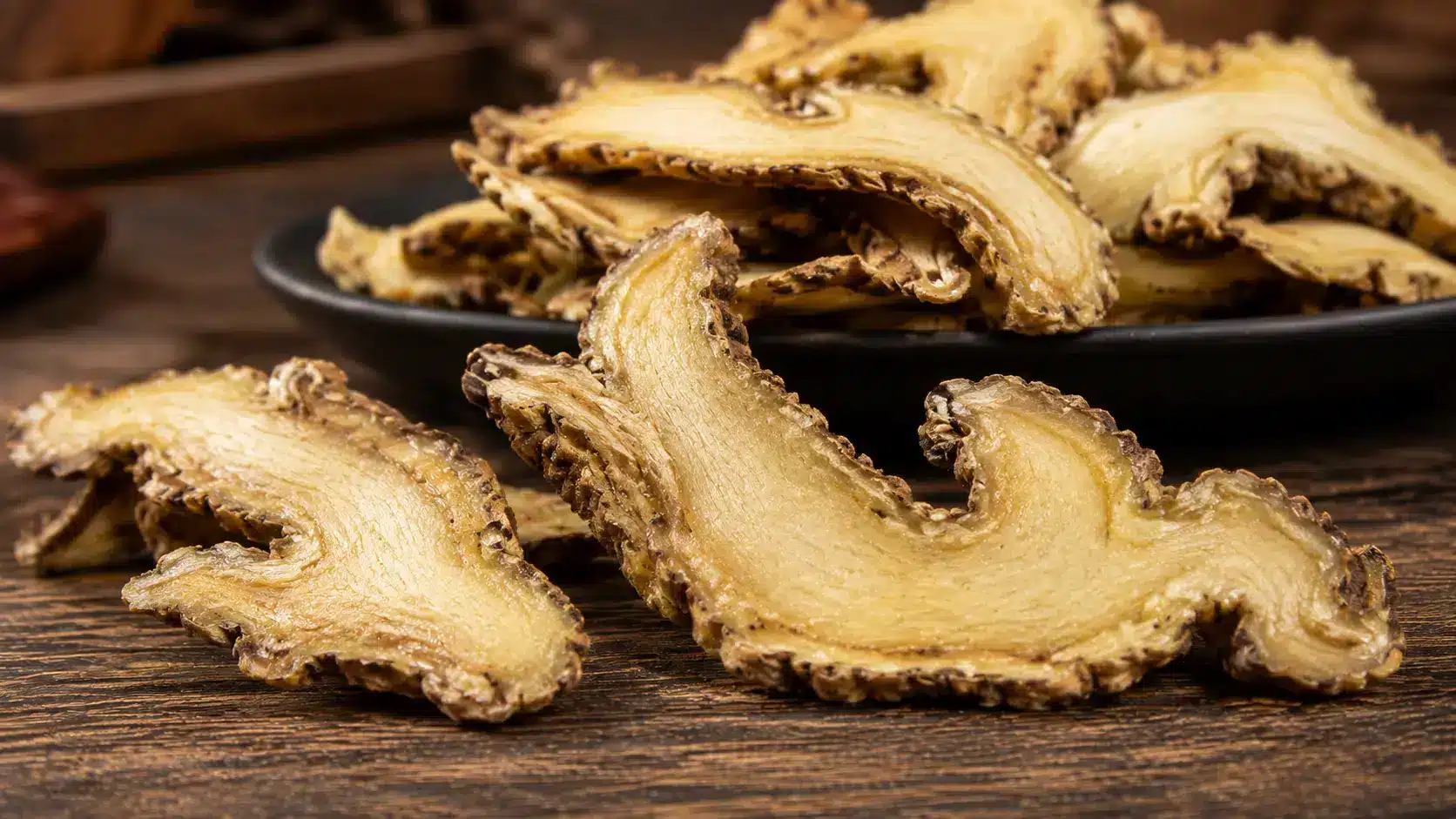
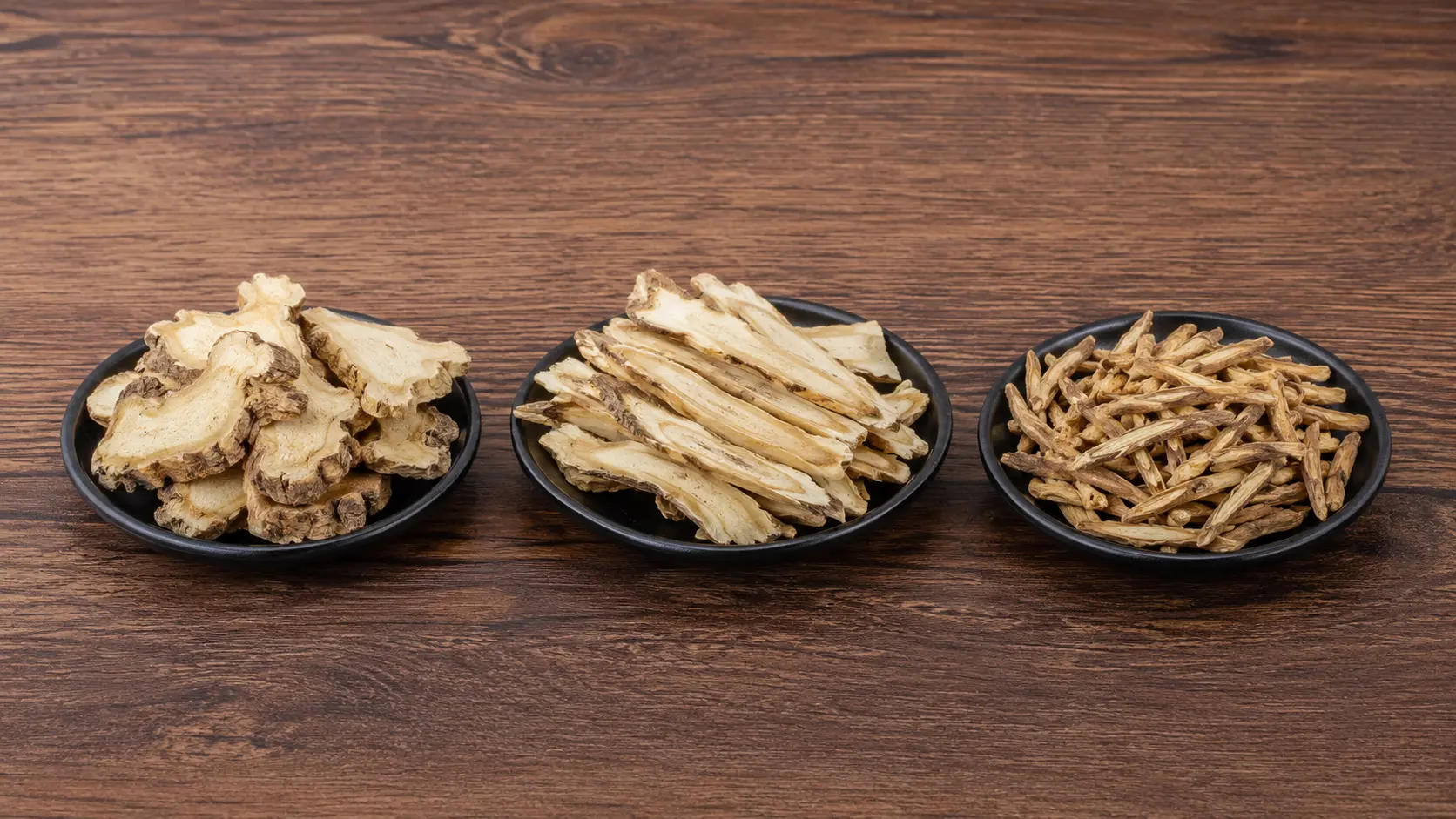
Dong Quai is unusual in that the root is sold by part, and the part changes the price and the use:
On top of the part, you choose the cut (whole, transverse slices, or sectioned) and the grade (root size, oil content, and how much low-value tail is mixed in). Deciding which part and grade fits your product — a soup line, an extract feedstock, or a tea — is where cost and quality trade off. Our angelica sinensis root slices product page lists the parts and cuts we run.
This matters more for Dong Quai than for most herbs, because sulfur fumigation attacks the very thing you are paying for — the aroma. Some processors sulfur Dong Quai to brighten colour and prevent mould and insects, but it leaves a sulfur dioxide residue that can breach import limits and dulls the fragrance.
How to tell them apart:
For any bulk order, specify sulfur-free in writing and confirm it on the batch documentation — with Dong Quai, your nose is one of the best first checks.
If you are unsure, raw slices are the more versatile starting point.
When a purchase order names the Chinese Pharmacopoeia, the 2025 edition (in force since 1 October 2025, NMPA announcement) sets these requirements for Angelicae Sinensis Radix. For ordinary Dang Gui slices, the checks and extractives are the same as for the crude root.
| Parameter | Ch.P. 2025 requirement |
|---|---|
| Botanical source | Angelica sinensis (Oliv.) Diels, dried root |
| Root size (crude root) | 15–25 cm long; head (Gui Tou) 1.5–4 cm diameter; branch roots (Gui Wei) 0.3–1 cm diameter |
| Slice format | Thin slices (1–2 mm under General Chapter 0213) |
| Moisture | ≤ 15.0% (root and raw slices); ≤ 10.0% for wine-processed Dang Gui |
| Total ash | ≤ 7.0% |
| Acid-insoluble ash | ≤ 2.0% |
| Alcohol-soluble extractives | ≥ 45.0% (70% ethanol, hot extraction); ≥ 50.0% for wine-processed Dang Gui |
| Volatile oil | ≥ 0.4% (ml/g) |
| Ferulic acid | ≥ 0.050% (dried basis, HPLC) |
| Identification | Microscopy and TLC against Angelica sinensis reference drug, ferulic acid and ligustilide |
| Heavy metals | General Chapter 0212: Pb ≤ 5, Cd ≤ 1, As ≤ 2, Hg ≤ 0.2, Cu ≤ 20 mg/kg |
| Pesticides | 47 prohibited pesticides (72 analytes) under General Chapter 0212 |
The monograph also states that roots which are strongly woody, dried out without oil, or show a green-brown cross-section are not to be used for medicinal purposes. This is the pharmacopoeial basis for judging Dong Quai by oil and aroma: a lot that barely meets the 0.4% volatile oil minimum may be technically compliant but commercially weak. In the 2025 edition, Dang Gui’s heavy-metal test moved from the monograph to the general limits in Chapter 0212 (Chinese Pharmacopoeia Commission interpretation, in Chinese). Buyers supplying the U.S. market may also be asked to meet the USP Dong Quai Root monograph, which uses its own marker compounds.
Oil and aroma narrow the field, but only lab testing confirms identity and purity — an HPLC fingerprint (against markers such as ferulic acid) plus the volatile-oil profile, and a residue and heavy-metal panel. We test every lot in our own laboratory before release; see how on our in-house laboratory and quality control page, and request a sample Certificate of Analysis (COA) for any grade.
One identity note: look-alike roots and other Angelica species are sometimes substituted for genuine Angelica sinensis, especially in cheaper mixed lots. An HPLC fingerprint is how you confirm you got the species — and the grade — you ordered.
How can I tell good Dong Quai from poor quality? Judge oil and aroma first: a good root is oily and slightly flexible with a strong sweet fragrance and a pale yellowish-brown cut surface. A dry, woody, faintly-smelling root is low grade or over-dried.
What is the difference between Dong Quai head, body, and tail? They are different parts of the same root, sold separately. The head (Gui Tou) and body (Gui Shen) are firmer and higher value; the tail (Gui Wei) is thinner, more fibrous, and cheaper. Specify which part you want.
What does “sulfur-free” Dong Quai mean, and why does it matter? It means the root was dried and stored without sulfur fumigation, so there is no added sulfur dioxide residue. Sulfur dulls Dong Quai’s aroma and can breach import limits, so specify sulfur-free for bulk orders.
Why is Dong Quai sometimes dry and woody? Because it is over-mature, poorly dried, or is actually the low-oil tail sold as whole root. Oil content is the main quality driver, so a dry, fibrous root is lower grade.
What are the Chinese Pharmacopoeia 2025 specifications for Dong Quai? Ch.P. 2025 requires Angelica sinensis root with moisture ≤15.0%, total ash ≤7.0%, acid-insoluble ash ≤2.0%, 70% ethanol-soluble extractives ≥45.0%, volatile oil ≥0.4% (ml/g) and ferulic acid ≥0.050% on a dried basis. Raw slices are cut thin and follow the same limits; wine-processed Dang Gui has moisture ≤10.0% and extractives ≥50.0%. Woody, dried-out roots without oil are excluded from medicinal use.
Is Dong Quai the same as Dang Gui? Yes — the same herb, Angelica sinensis. “Dong Quai” is the common English trade name; “Dang Gui” is the pinyin of the Chinese name.
Aile Herb Sourcing & Quality — our team works directly with the Gansu processing lines on grading, testing, and export documentation.
To source Dong Quai (Angelica sinensis) slices, review our root and rhizome herbs range and send the part, cut and volume you need for a sample COA and quotation.
