Tell Us About Your Project
Share your product, quantity and project requirements. We will review the details and respond with the relevant next steps.

A private-label tea project can have several different minimums, but they do not all operate in the same way. The formula can set a finished-product minimum. The retail carton sets a printed-box minimum. Printed individual overwrap has its own print minimum, but excess printed packaging can be retained for a later reorder under the current storage arrangement. Understanding which minimum applies to finished product and which applies only to packaging makes the first order easier to plan. Buyers planning a branded tea bag line can review our private label herbal tea bags service before confirming the first-order structure.
Custom formula: 1,500 boxes
For an existing confirmed blend, the formula itself does not add a separate minimum. For custom formula development, the higher formula requirement becomes the applicable finished-product quantity.
Printed carton minimum
This is the current finished-box starting point for an existing blend where no higher formula requirement applies.
Packaging print minimum
This minimum applies to the printed packaging component. It does not automatically equal the finished-product quantity for the first run.
The number of bags per retail box determines how much printed overwrap is used in a 300-box first run.
| Bags per retail box | Sachets required for 300 boxes | Minimum printed quantity | Packaging balance after 300 boxes |
|---|---|---|---|
| 20 | 6,000 | 6,000 | 0 |
| 15 | 4,500 | 5,000 | 500 |
| 10 | 3,000 | 5,000 | 2,000 |
The table shows packaging consumption, not three different finished-product MOQs. For a 20-bag box, the first 300 boxes require 6,000 sachets, which is already above the 5,000-sachet print minimum.
For 15- or 10-bag boxes, the first 300 boxes use only part of the minimum print quantity. The unused balance can be retained for the next order under the current arrangement. This distinction allows the retail pack count to be chosen for the product and market without automatically forcing all printed overwrap into the first finished production run.
Under the current confirmed arrangement, remaining printed packaging can be retained for up to two years. During the agreed storage period:
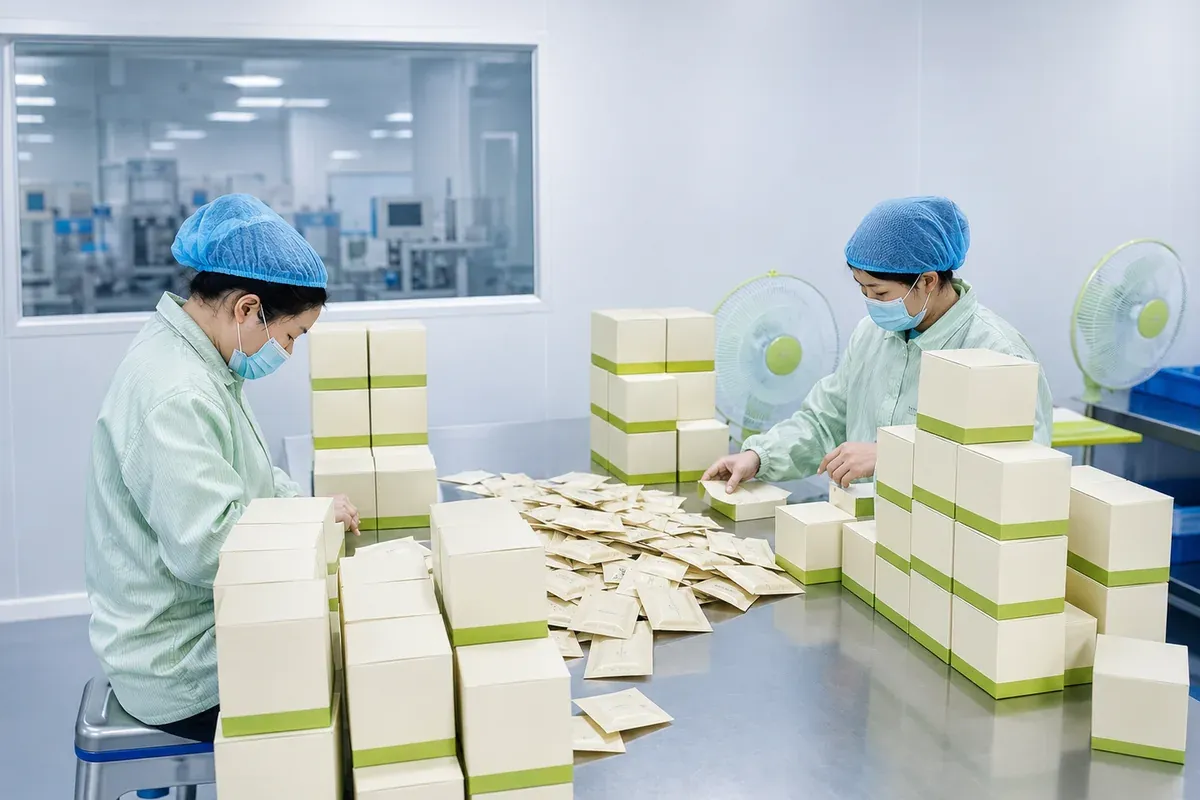
A reorder can therefore use retained packaging before a new print run is required. The production quantity and the packaging print quantity should still be shown separately in the quotation so that the buyer can see what is being produced now and what packaging remains for future use.
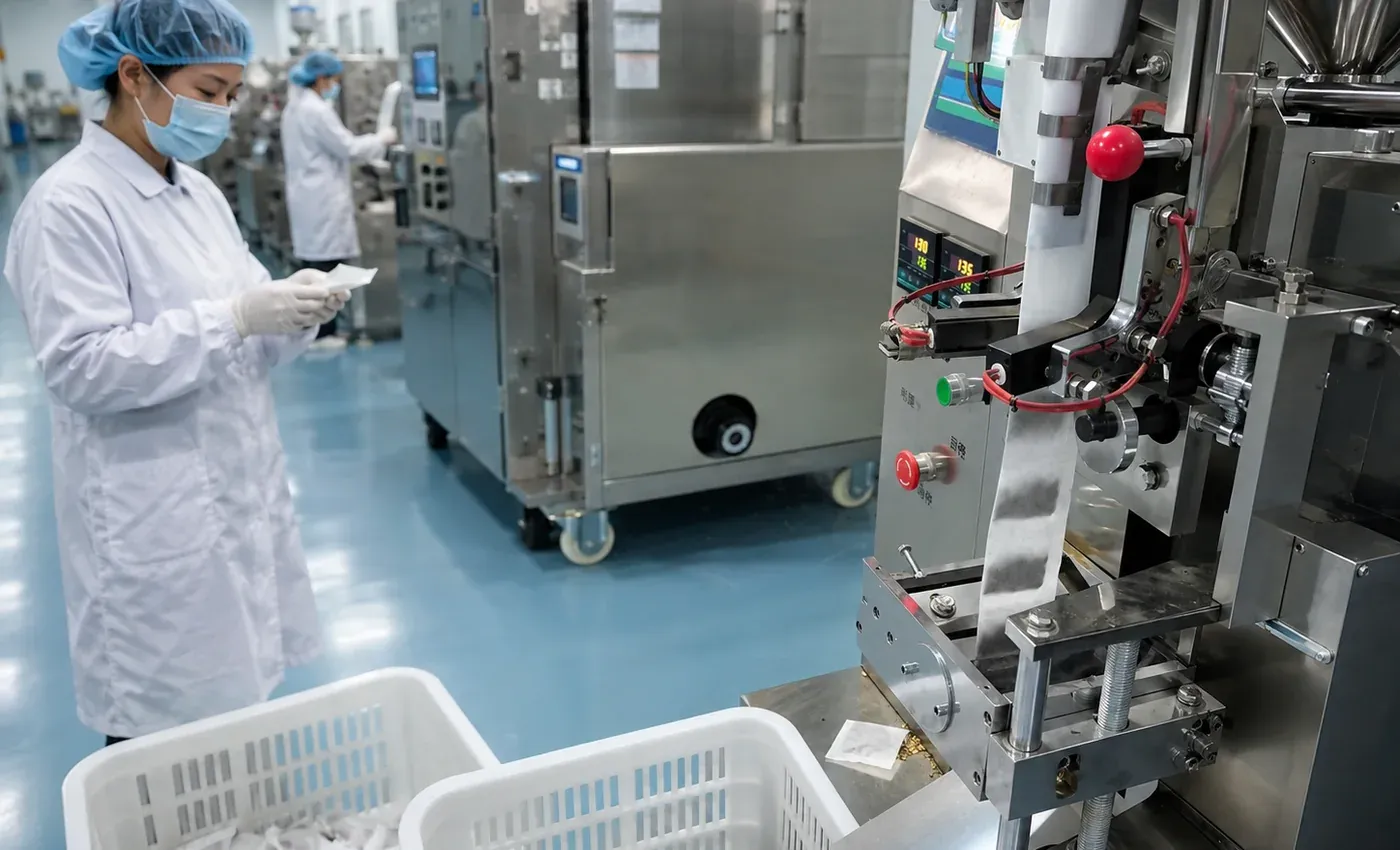
Different formulas require separate production handling and line clearance. Products from different customers are also not combined into one production batch.
For order planning, this means:
A multi-formula launch should therefore be costed and documented by formula rather than by shipment.
This is particularly relevant to testing and setup costs. A first launch with several formulas can share one shipment and one project timeline, while still carrying separate batch-level requirements for each formula.
The quotation should separate cost categories because they behave differently on the first order and on a reorder.
Where the same approved packaging and formula are reused, completed setup items generally do not need to be repeated.
These items apply to each production batch based on the confirmed product and testing scope.
These items are added where required by the buyer, destination specification or confirmed project scope.
Production lead time starts after the formula is confirmed and the agreed payment or deposit is received. For a standard existing blend with materials in stock, the current planning basis is:
Approximately 5 working days
Approximately 10 working days
Approximately 10 working days
From 15 working days
Testing and packaging can run in parallel after the required details are confirmed.
These are planning figures for a standard confirmed project, not a universal lead-time guarantee. Custom formulas, different packaging structures or additional testing can affect the schedule.
From April to June, allow about 10 extra working days. The applicable schedule is confirmed in the project quotation.
Sample approval does not close every remaining change.
The important planning boundary is production start. If a change is raised before that point, its effect can still be assessed and re-confirmed. Once production starts, it cannot be applied to the active production batch as a simple revision.
For an existing confirmed blend, the current formula adds no separate formula minimum. The current retail-carton starting point is 300 boxes. If printed individual overwrap is used, the packaging supplier prints at least the required print minimum and any approved unused balance can be retained for a later reorder.
Custom formula development starts from 1,500 boxes. At that quantity, the formula requirement is higher than the current retail-carton minimum and becomes the principal finished-product quantity requirement.
Each formula remains a separate production and testing batch. A multi-formula order should therefore show the quantities, testing scope and batch-related items for each formula rather than treating the full shipment as one production batch.
Please provide:
If some points are not yet final, send the information already available. The review can compare workable order structures before packaging artwork and production are locked.