Tell Us About Your Project
Share your product, quantity and project requirements. We will review the details and respond with the relevant next steps.

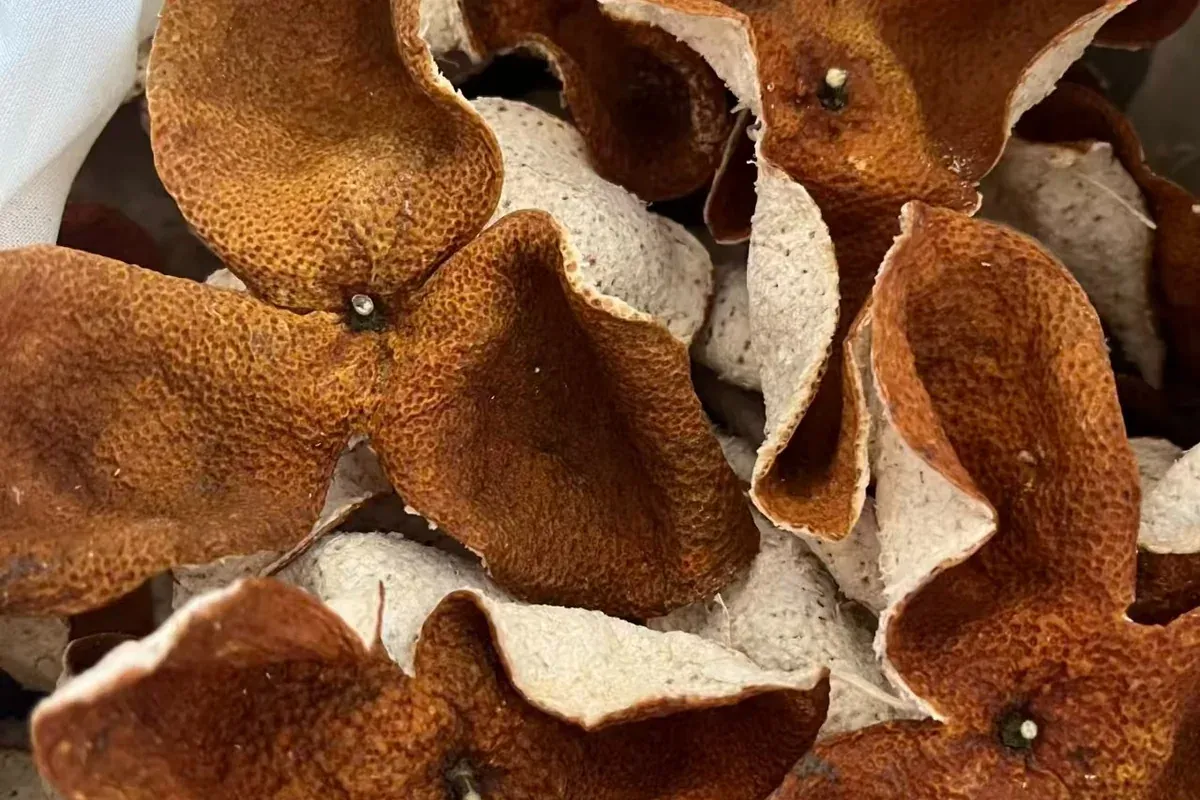
Dried tangerine peel — chen pi (陈皮) — is one of the few Chinese herbs priced by age as much as by grade. Two lots with the same appearance on a price list can sit far apart depending on the year of harvest and on whether the peel comes from Xinhui in Guangdong or from a standard mandarin-growing region. This guide sets out what those differences mean in practice, which standards a specification should reference, and what to write into an enquiry so that quotes from different suppliers can be compared.
Aile Herb supplies chen pi as a food-grade herbal ingredient and as a decoction piece, in 1-year, 3-year, 5-year and 10-year lots, produced without sulfur fumigation. Xinhui-origin peel is available on request and priced separately. Origin, age, quantity and the documents available are confirmed per enquiry and per batch.
Chen pi is the dried, aged peel of the mandarin orange, Citrus reticulata Blanco and its cultivated varieties; the Chinese Pharmacopoeia names ‘Chachi’, ‘Dahongpao’, ‘Unshiu’ and ‘Tangerina’ among them. The monograph recognises two commercial forms:
“Xinhui chen pi” is a geographical indication product, not a pharmacopoeia category. Under the local GI standard, it is peel from ‘Chachi’ mandarins grown and aged inside the defined area of Xinhui District, Jiangmen, for at least three years; younger material is “gan pi” (柑皮), mandarin peel. The GI standard’s harvest types (green, semi-red and red peel, by ripeness at picking) are its own classification and are separate from the pharmacopoeia’s definitions.
For most food and tea applications, the difference between the two forms is aroma and price rather than compliance. Both are the same species, both are on China’s food-medicine homology list (the 2002 list uses the name 橘皮, mandarin peel), and both fall under the same pharmacopoeia monograph.
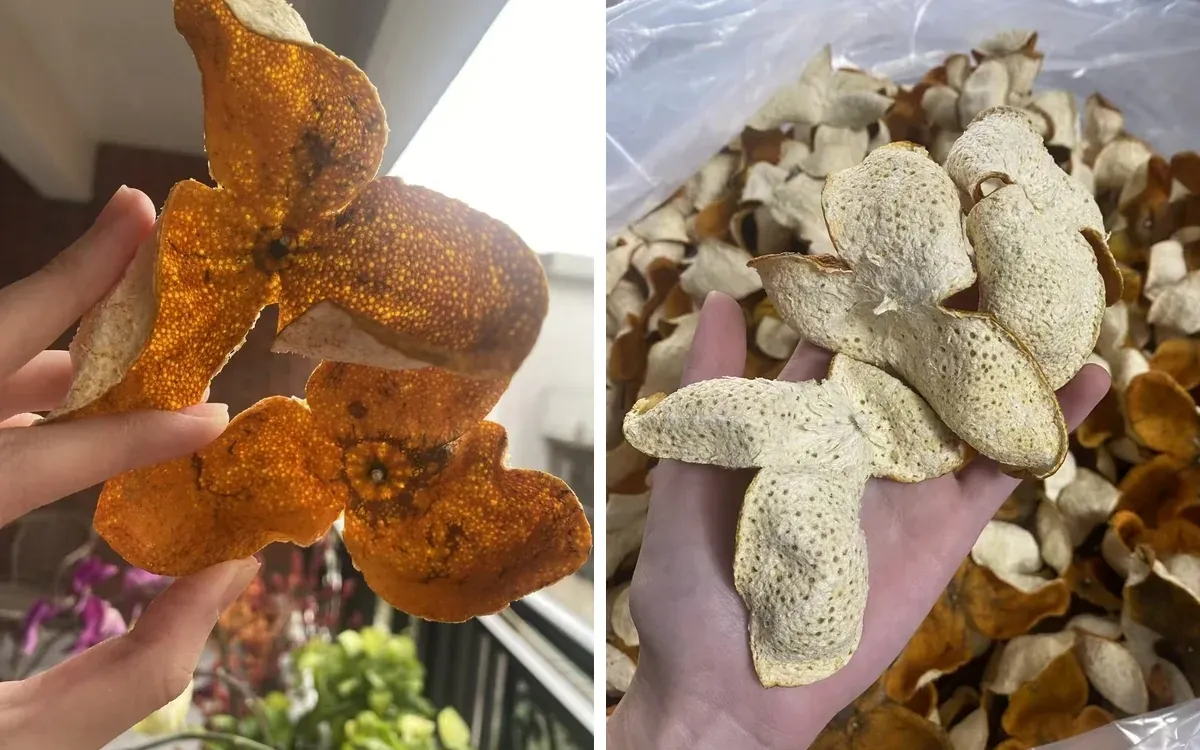
| Point of comparison | Standard chen pi | Xinhui chen pi (GI) |
|---|---|---|
| Variety | Citrus reticulata and cultivars | Citrus reticulata ‘Chachi’ only |
| Origin | Zhejiang, Fujian, Jiangxi, Sichuan, Guangdong outside Xinhui | Grown and aged within the defined area of Xinhui District, Jiangmen |
| Harvest types | Mostly mature (red) peel | Green, semi-red and red peel by ripeness at picking; each has its own hesperidin minimum |
| Peel thickness | 1–4 mm, irregular pieces | About 1 mm, three lobes joined |
| Minimum age to be sold as chen pi | No fixed rule; sold from 1 year | 3 years under DB4407/T 70-2021 |
| Grading | By piece size, colour, cleanliness; supplier-defined | Grades 1–3 by piece size, uniformity, aroma, defects, under the GI standard |
| Typical use | Tea blends, decoction pieces, extraction, food ingredient | Premium tea, gift retail, brewing on its own |
| Price position | Base | Above base at the same age; rises with age |
Whether a blend needs Xinhui peel depends on the formula and how it is brewed; the practical test is a side-by-side sensory comparison in the buyer’s own recipe. A buyer selling chen pi on its own, or making an origin claim on the pack, needs the GI documentation, not just the word “Xinhui” on an invoice.
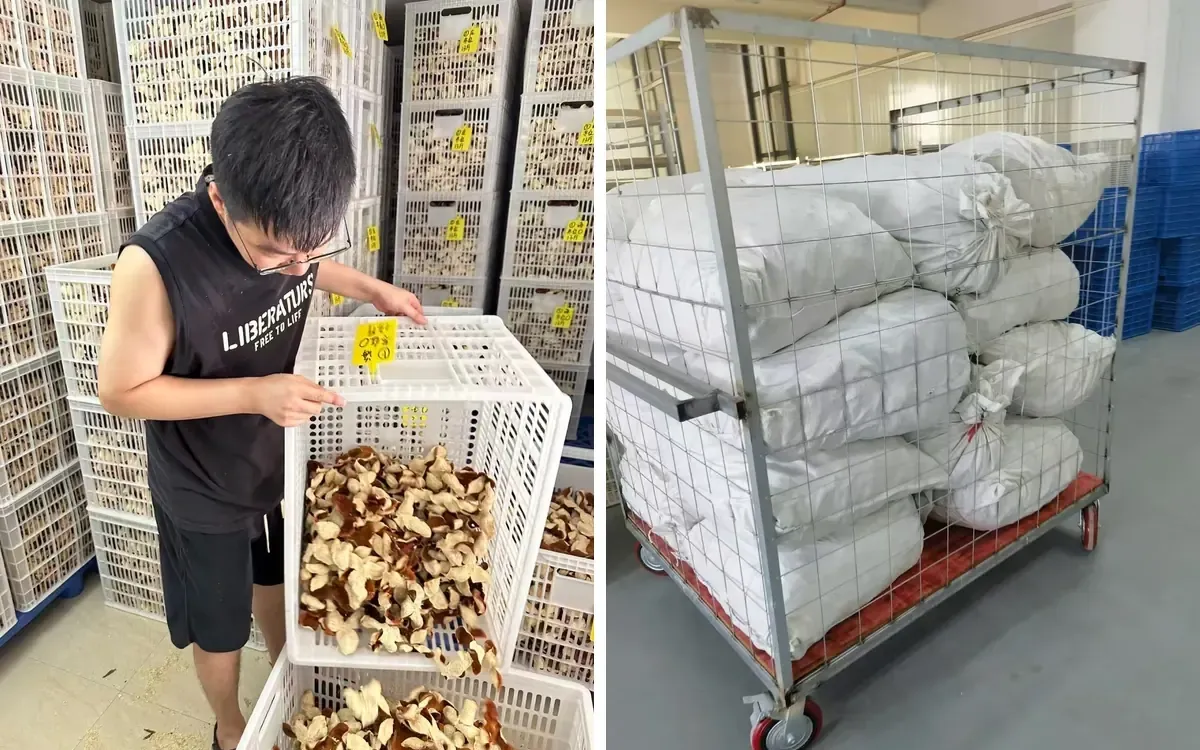
Chen pi is stored dry, turned and sun-aired periodically, and sold by age. The Xinhui GI standard sets the storage conditions: ventilated, humidity not above 70%, temperature not above 35 °C, with pest and mould controls.
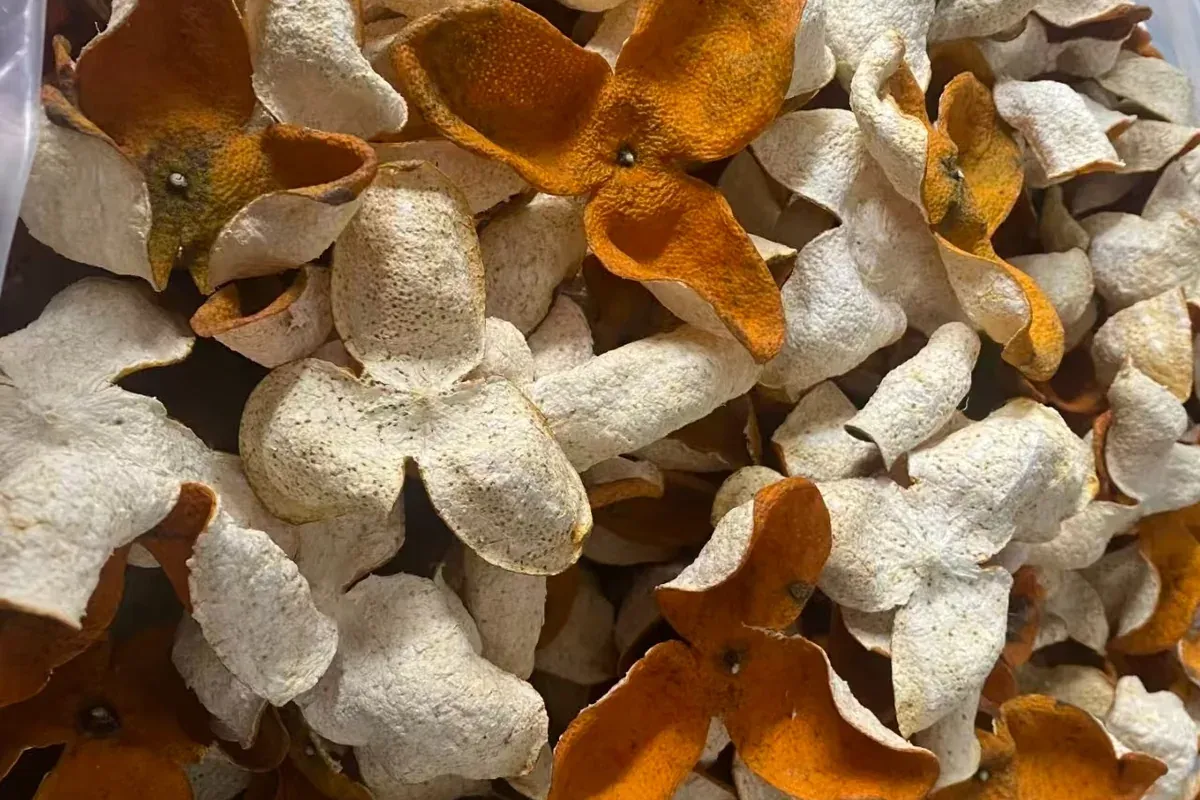
In general terms, young peel is brighter in colour with a sharper citrus-oil aroma, and older peel is darker with a rounder, softer aroma. These are tendencies, not a scale for reading age off a sample.
Age is a documentation question, not a laboratory one. A routine COA, or a single hesperidin result, does not establish the year of harvest on its own. Studies of chen pi in storage report different trends in marker compounds depending on sample and conditions, so a compound figure cannot be turned into a year count. Age rests on batch identity plus harvest and storage records; where a buyer needs more, specialised authentication is a separate exercise. Ask what records the supplier can actually provide for the lot being quoted.
Food use, decoction-piece use, the Xinhui GI product and the destination market’s import rules are four different frameworks. A specification should say which one applies; one table cannot replace another.
| Parameter | Chinese Pharmacopoeia [2025], chen pi monograph (assay on dried basis) | Xinhui GI standard DB4407/T 70-2021 |
|---|---|---|
| Moisture | ≤ 13.0% | ≤ 13% |
| Hesperidin — chen pi | Crude ≥ 3.5%; decoction pieces ≥ 2.5% | — |
| Hesperidin — guang chen pi | Crude ≥ 2.0%; decoction pieces ≥ 1.75% | Green peel ≥ 2.5%; semi-red ≥ 2.0%; red ≥ 1.5% |
| Nobiletin + tangeretin — guang chen pi | Crude ≥ 0.42%; decoction pieces ≥ 0.40% | — |
| Aflatoxin B1 | ≤ 5 µg/kg | ≤ 5 µg/kg |
| Total aflatoxins (B1+B2+G1+G2) | ≤ 10 µg/kg | ≤ 10 µg/kg |
| Lead / cadmium | Per the pharmacopoeia’s general requirements for herbal materials | Per the standard’s contaminant table, which is expressed on a fresh-fruit basis with a dehydration conversion for dried peel; do not apply the figures to dried peel without that conversion |
| Sulfur dioxide | Per the pharmacopoeia’s general SO₂ residue requirement | Not separately tabulated |
Aflatoxin is one of the key risks for a material that is stored for years; a lot that was dried or stored badly at any point can fail. Ask for aflatoxin on every batch COA, not only on the first one.
Sulfur. Some producers fume young peel with sulfur to keep the colour bright and stop mould during the first drying. Two different things are worth separating in a specification: a process statement that the peel was not sulfur-fumigated, and an SO₂ residue result on the batch COA. Aile Herb’s chen pi is produced without sulfur fumigation; an SO₂ residue test can be added to the batch COA on request so that the buyer has the figure as well as the statement.
A chen pi specification that lets suppliers quote against the same thing has eight lines:
Grade names (“premium”, “AAA”, “first grade”) mean different things to different suppliers. A piece-size range and a defect allowance are more useful than a grade word.
Is Xinhui chen pi always better?
It is a different product with a protected origin, a single variety and a three-year minimum age. For blending it is a sensory and cost decision; for a stand-alone product with an origin claim it is the correct choice.
Can you prove the age of a lot?
Not by a routine test. We provide the harvest year and the storage records available from the producer for the lot quoted; the buyer reviews those with the sample. Treat any laboratory certificate that claims to “prove” a specific age with caution.
Is chen pi on China’s food-medicine homology list?
Yes, listed as 橘皮 (mandarin peel) on the 2002 list, and used as an ordinary food ingredient in China. That status does not carry over automatically to other markets; see the homology list guide.
What is the shelf life?
Aging years and shelf life after packing are different things. The best-before date and storage conditions for a packed product are set from the batch, the packaging and the buyer’s stability data, not from the age of the peel; moisture and aflatoxin results are part of that picture, not a substitute for it.
What quantities can you supply?
Standard 1-year peel from 1 kg per order. Aged and Xinhui lots are quoted per enquiry against available stock. Send form, origin, age, quantity and destination through our Chinese herbal slices page.
