Tell Us About Your Project
Share your product, quantity and project requirements. We will review the details and respond with the relevant next steps.

When comparing a Chinese herb manufacturer vs trading company, B2B buyers should look beyond the supplier’s label. The decision should be based on who controls production, how samples are matched to bulk batches, which tests and records are available, how traceability is maintained, and who is accountable when the agreed specification is not met.
Both supplier types can serve a buyer well. A manufacturer that genuinely operates the stated facility can offer tighter process control and clearer batch documentation, while a capable trading company can consolidate multiple SKUs, coordinate several factories and handle export logistics. The evaluation question is not which label is better in the abstract, but which supplier can demonstrate control, documentation and accountability for the specific product you intend to buy.
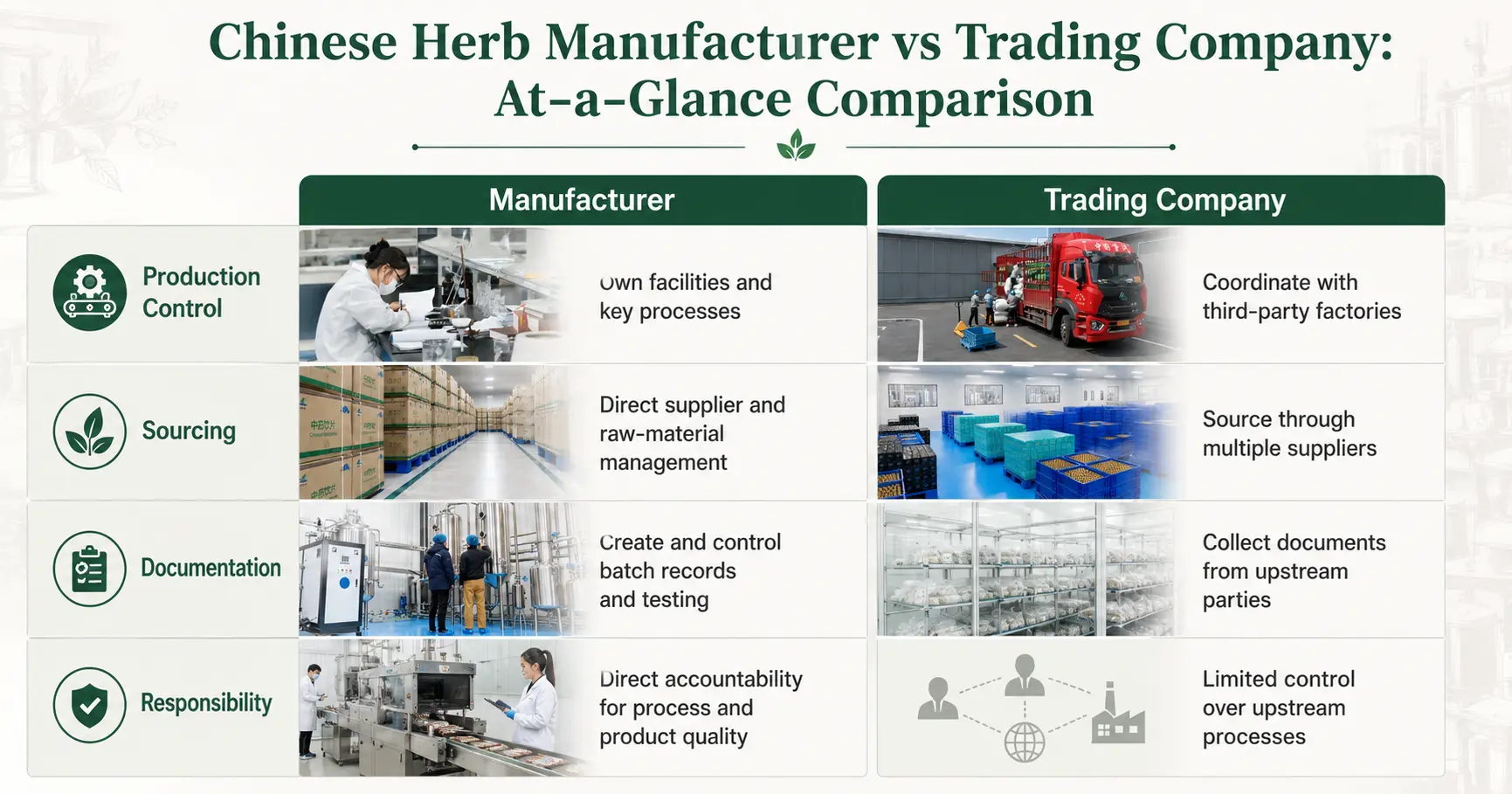
The table below summarizes how the two supplier types tend to differ across the factors buyers usually weigh. The final column is the important one: in every row, the label alone proves nothing, and the buyer must verify the claim case by case.
| Decision Factor | Manufacturer | Trading Company | What the Buyer Should Verify |
|---|---|---|---|
| Direct production control | Often controls key steps in-house, if performed at the stated site | Normally coordinates production across partner factories | Which steps happen at which address, and who signs off on quality |
| Product range | May be narrower, tied to installed equipment | Often broader across origins and categories | Which items are made in-house vs. sourced from partners |
| Sourcing flexibility | Depends on the supplier and its warehouse network | May offer wider alternative sourcing | How alternative origins or grades are selected and documented |
| MOQ flexibility | Varies; line changeovers may raise minimums | May accept smaller mixed orders by consolidating | Actual MOQ per SKU, in writing, against the agreed spec |
| Custom cutting or processing | Possible where the process is done in-house | Possible via a partner factory | Where the cutting or processing is physically performed |
| Sample development | May be handled on the production line | Often arranged through a producing factory | Whether the sample comes from the same line as bulk |
| Sample-to-bulk consistency | Depends on process control and records | Depends on the producing factory and oversight | Documented link between approved sample and bulk batch |
| Testing capability | May include in-house process-control testing | Usually relies on factory or third-party labs | What is tested in-house vs. by an accredited third party |
| Batch documentation | Often generated at the site of manufacture | Compiled from producing factories | Whether records are batch-specific, not generic |
| Batch traceability | May be stronger when production is in-house | Depends on records passed up the chain | The full chain from raw-material lot to shipment |
| Certificate scope | Certificates name a holder, site and scope | Certificates may belong to partner factories | That the certificate covers the actual goods and site |
| Packing and labeling | May be controlled directly | Often coordinated across suppliers | Who controls label content and shipping marks |
| Export coordination | Depends on the supplier’s own filing and capacity | Frequently a core strength | Who is the exporter of record and holds the filing |
| Issue resolution | May act directly on nonconforming batches | Must escalate to the producing factory | The written process for complaints and corrective action |
| Supply continuity | Tied to one site’s capacity | May offer more fallback sources | How continuity is maintained if one source fails |
Understanding what each party can realistically control helps a buyer ask sharper questions and read documents more critically.
When production genuinely takes place at the stated facility, a manufacturer may control raw-material receiving, identity and specification review, sorting and cleaning, cutting or other processing, drying, in-process inspection, packing, batch coding, batch record creation and the investigation of quality issues. These are meaningful advantages for consistency and documentation.
These are advantages only when the processes are actually performed at the address the supplier names. A company can accurately describe itself as a manufacturer for some products while buying others finished from partner factories, so the buyer’s task is to establish which specific items and steps are handled in-house rather than accepting a company-wide claim.
A trading company may add value through broader sourcing coverage, access to multiple origins or categories, consolidation of products from several factories, coordination of mixed-SKU orders, alternative sourcing when a primary supplier cannot deliver, and logistics coordination. For a buyer assembling a diverse order, this can reduce the number of relationships to manage.
The trade-off is that a layer sits between the buyer and the production floor. The buyer should identify which factory produced each item and, critically, who holds responsibility for quality decisions and corrective action when a batch does not meet specification.
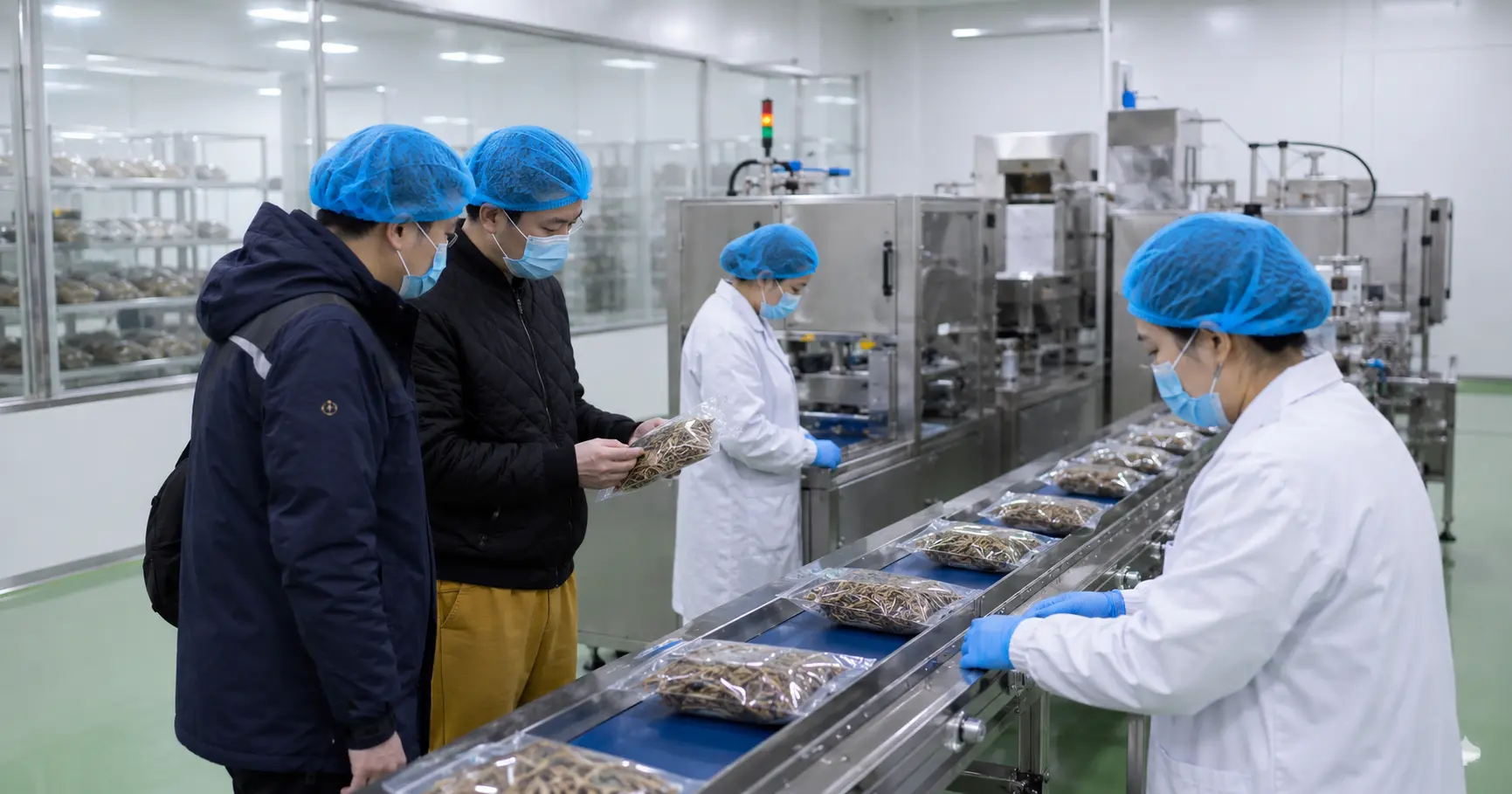
The word “manufacturer” on a website is a starting claim, not proof. A practical verification sequence looks like this:
China-Specific Checks for Chinese Herbal Slices
For Chinese herbal slices (TCM decoction pieces, 中药饮片), the licence itself is the most direct evidence. A company that manufactures decoction pieces must hold a Drug Manufacturing License (药品生产许可证) naming the manufacturing address and a production scope that covers decoction pieces. A company that only distributes them holds a Drug Distribution License (药品经营许可证) instead — and wholesale distributors may legally sell decoction pieces, so a right to sell does not show that the company manufactures.
Three practical checks: search the supplier’s Chinese legal name or Unified Social Credit Code on China’s National Enterprise Credit Information Publicity System and read the registered business scope (manufacturing or processing wording points to a producer; sales, wholesale or import-export wording alone points to a trader); ask for the Drug Manufacturing License and confirm that its company name matches the business license and its scope includes decoction pieces; and be cautious with a standalone “GMP certificate”, because China stopped issuing drug GMP certificates when the revised Drug Administration Law took effect in December 2019.
As an example, the facility supplying Aile Herb holds Drug Manufacturing License No. 甘20160045, scope TCM decoction pieces, issued by the Gansu Provincial Drug Administration and valid through January 2031.
Website photographs alone do not prove ownership or current control of a facility; the same images sometimes appear across unrelated companies. Verification should stay within normal commercial and lawful methods — document review, supplier questions, video walkthroughs and audits — rather than intrusive investigation.
Supplier type alone does not prove quality. What proves consistency is a documented path from an approved specification and approved sample, through a defined raw-material lot, processing parameters and in-process checks, to a finished batch with its packing record and shipment lot. When those links are recorded and can be shown, the label above them matters far less.
It helps to separate four things buyers often blur together. In-house process-control testing supports day-to-day production decisions. Accredited third-party testing provides independent evidence for critical attributes. A general product specification describes the target, while a batch-specific COA describes the actual goods being shipped. An in-house laboratory supports control but does not remove the reason many buyers still request independent third-party reports.
Depending on the product and the agreed specification, relevant test items may include identity, moisture, ash, pesticide residues, heavy metals, microbiology, sulfur dioxide residue, and relevant marker compounds or assay. Not every test applies to every product; the correct panel follows from the specification and destination market, so the specification should be agreed before a batch is approved. A documented quality control process is what turns that sequence into evidence a buyer can check.
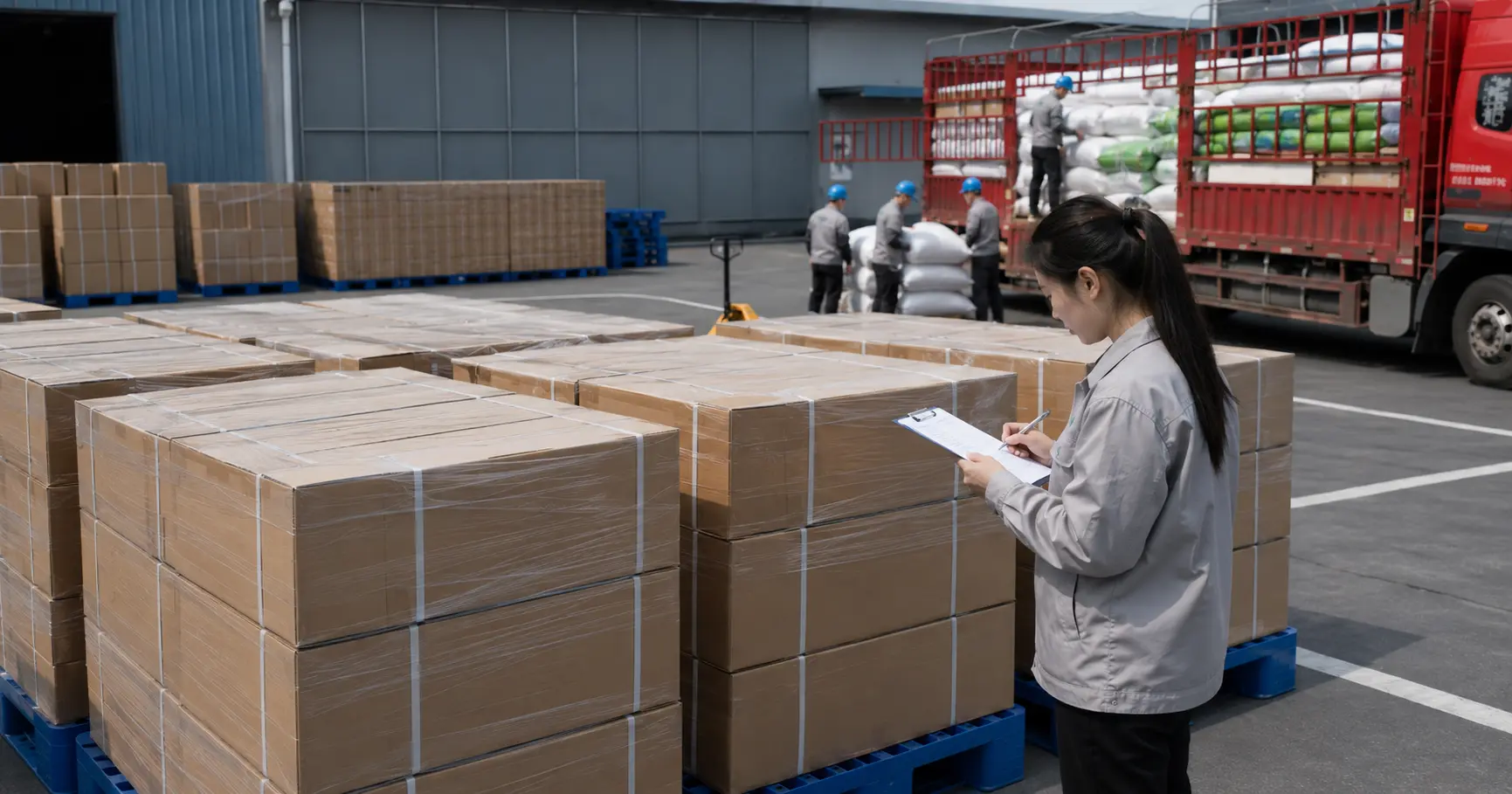
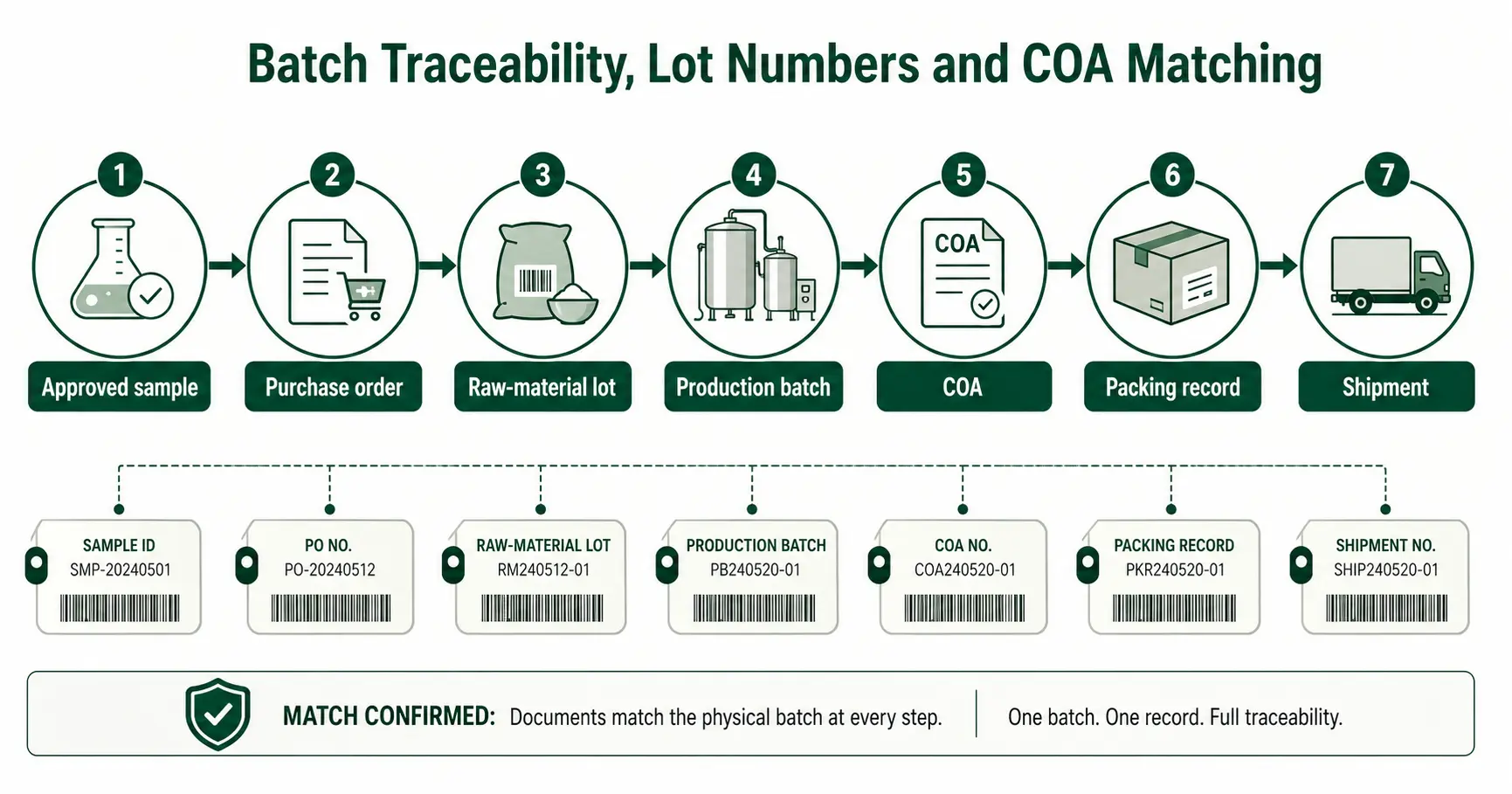
Traceability is where many supplier evaluations succeed or fail, because it is where documents either connect to the real goods or quietly do not. A workable chain runs:
Approved sample → Purchase order → Raw-material lot → Production batch → COA or test report → Packing record → Shipment.
To confirm the documents describe the goods in front of you rather than a different batch, compare the following across the paperwork and the physical product:
If the batch number on the COA does not match the packing label, or if the sampling, production and report dates do not follow a plausible sequence for that document type, request clarification before approving the batch.
Marking, record-retention and regulatory traceability requirements vary by destination market and product classification. Buyers should treat the lot number as a core control for linking records to goods while confirming any market-specific requirements separately.
Supplier qualification is rarely a single event. It may combine document review, remote video review, sample evaluation, third-party laboratory testing, a remote audit, an on-site factory audit, pre-shipment inspection and ongoing supplier performance review. Buyers can scale the depth to the risk and value of the product.
An audit may examine the production site, raw-material receiving, approved-supplier management, equipment and maintenance, process controls, laboratory arrangements, batch records, retained samples, nonconforming-product handling, corrective and preventive action, warehouse conditions, pest and moisture control, and packing and label control. It is one strong source of evidence for a point in time, not a guarantee of every future shipment — which is why pre-shipment checks and batch documentation remain relevant after qualification.
Certificates deserve the same scrutiny as any other claim. Rather than accepting that a supplier “has ISO” or “has GMP,” check the legal certificate holder, the manufacturing address, the issuing or certification body, the certificate number, the validity dates, the standard named, and the product, process and site scope. Then confirm the certificate actually applies to the goods you are buying. One ISO, GMP or HACCP certificate does not automatically cover every product, every workshop, or a partner factory. Buyers can review a supplier’s certifications and applicable scope on the same basis.
This section describes general principles only and is not legal advice. Requirements depend on the destination market, product classification and intended use, and buyers should confirm the applicable rules with their own compliance advisers.
Where applicable, U.S. food importers may carry risk-based responsibilities under the FDA’s Foreign Supplier Verification Programs (FSVP) rule. For products within the relevant scope, supplier-verification activities may include audits, sampling, testing and record review, chosen according to risk. In the European Union, general food-traceability principles under Regulation (EC) No 178/2002, Article 18, and the European Commission’s food-traceability guidance require food businesses to maintain systems that identify their immediate suppliers and business recipients — the “one step up, one step down” approach. ISO-based supplier management, in turn, focuses on evaluating and controlling externally provided products, processes and services rather than mandating any single method.
None of these frameworks decides the manufacturer-versus-trading-company question for you. What they share is an expectation that the importer can identify who is responsible and produce records — exactly what a disciplined supplier evaluation sets out to confirm.
A single warning sign does not prove a supplier is unreliable; it means more evidence is required before proceeding. Practical signals worth pausing on include:
Treat each as a prompt to ask one more question, not as a verdict.
There is no universal answer. The table below suggests where buyers often start, and what still needs verification regardless of the starting point.
| Buying Situation | Likely Starting Point | Why | What Still Requires Verification |
|---|---|---|---|
| One standardized herb bought regularly in bulk | Often a manufacturer | Repeat volume rewards direct process control | That production is in-house and batches are consistent |
| Custom cutting or processing | Often a manufacturer | Custom steps are easier where the line is controlled | Where the processing physically happens |
| Multiple herbs from several origins | May be a trading company | Consolidation across origins reduces relationships | Which factory made each item |
| Mixed low-volume trial order | May be a trading company | Smaller mixed orders can be consolidated | Batch documentation for each SKU |
| Strict batch-traceability requirement | Manufacturer or tightly controlled trading company | A shorter production chain can help, but documented partner controls may also provide reliable traceability | The complete sample-to-shipment record chain |
| Direct communication with production personnel | Likely a manufacturer | Fewer intermediaries between buyer and floor | Who actually answers technical questions |
| Need for alternative sources | May be a trading company | Wider network offers fallback options | How alternatives are qualified and documented |
| Private-label or customized packing | Depends on the supplier | Either type may coordinate packing | Who controls label content and approval |
| Third-party inspection before shipment | Either type | Inspection is arranged, not inherent to the label | Access and scope agreed in advance |
| One supplier to consolidate several product lines | May be a trading company | Single point of coordination across lines | Responsibility for quality on each line |
A focused set of questions early in a relationship reveals more than a long specification exchange. Ask the supplier:
Alongside the questions, a compact checklist keeps an evaluation consistent across suppliers and captures most of what the Chinese herb manufacturer vs trading company distinction was meant to reveal.
Aile Herb is a China-based export supplier supported by a production facility in Pingliang, Gansu. Buyers can review Aile Herb’s factory overview, the production facility’s in-house laboratory, its certifications and applicable scope, and the quality control process behind each batch, then submit their specific product and documentation requirements. From there, requests for batch-specific information, testing scope and audit access can be assessed against the actual product rather than a general claim.
No. Supplier quality depends on control systems, documentation, the strength of production partners and clear accountability, not on the company label. A well-run trading company with strong supplier qualification can deliver consistent goods, while a nominal manufacturer with weak records may not. Evaluate the systems and evidence behind the label rather than the label itself.
Confirm the legal company name and registered business scope, verify the actual production address, and ask which products and processes are performed there. Request production evidence such as line photographs or a live video walkthrough, review a sample batch record and batch-specific COA, and check whether the site will accept a buyer or third-party audit. Website images alone are not proof.
Which Chinese license shows that a supplier manufactures herbal slices? The Drug Manufacturing License (药品生产许可证) with a production scope covering TCM decoction pieces and a named manufacturing address. A Drug Distribution License (药品经营许可证) allows a company to sell decoction pieces but does not show that it manufactures them.
Request the approved specification, a batch-specific COA tied to the actual lot, relevant third-party test reports, raw-material and production lot information, the packing record and supporting shipment documents. Compare batch numbers, product form and dates across all of them so the documents describe the specific goods being shipped rather than a representative sample.
No. In-house testing supports process control but is generated by the supplier itself. Independent third-party testing provides objective evidence for critical attributes such as pesticide residues and heavy metals. Many buyers use both: in-house checks for control, and accredited third-party reports to verify key parameters.
Read the certificate rather than trusting the claim. Check the legal holder, manufacturing address, issuing body, certificate number, validity dates and the standard named, then confirm the stated product, process and site scope includes the goods you intend to buy. One certificate does not automatically cover every product, workshop or partner factory.
Watch for inconsistent company or site identities, COA batch numbers that do not match labels or shipping documents, production sites that cannot be verified, unclear outsourcing, and testing claims made without methods or laboratory identification. Any one of these is a prompt to gather more evidence before ordering, not automatic proof of a problem.
To move from general comparison to a specific evaluation, share the details that let a supplier respond with real information: product or herb name, botanical name where applicable, product form or cut, quantity, required specification, testing requirements, packing format, destination market, and the documents you need to receive. With those in hand, a supplier can provide batch-specific and company information you can verify.
To verify the manufacturing licences, FDA registration and management-system certificates behind Aile Herb supply, review our certifications page, then request company and batch information for your order.
